Field response matrix
Urban on-site targets under 4 hours for critical faults, suburban under 8 hours, rural under 24 hours, with a multilingual triage hotline.
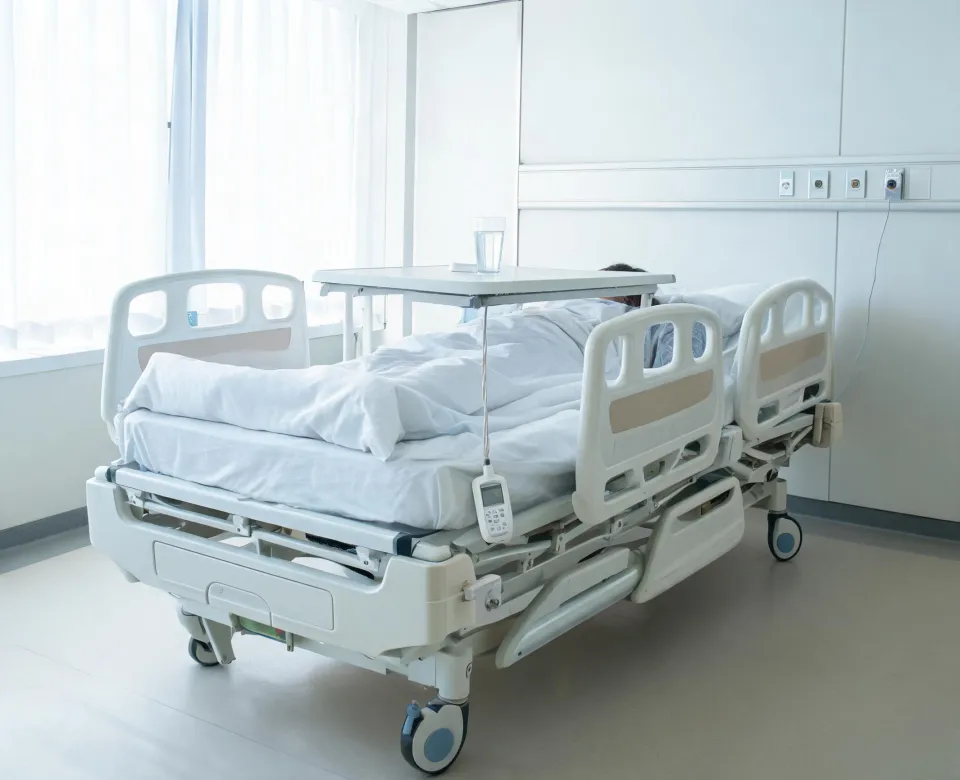
Hospital beds · smart patient support · care interfaces
Specify electric hospital beds, air-surface systems, monitoring interfaces, and transfer workflows with FDA 510(k), CE Mark under MDR 2017/745, ISO 13485, and IEC 60601 evidence boundaries attached to each reference.
Specification review
Expand each panel for home-health versus inpatient constraints. Confirm HCPCS coding, caregiver training time, and connected-care requirements against the exact commercial reference.
| Field | Review point |
|---|---|
| Electrical safety | IEC 60601-1 / 60601-1-2 EMC dossier and alarm priority mapping under IEC 60601-1-8 |
| Surface strategy | Pressure-redistribution mode, microclimate control, and mattress interchangeability with documented IFU limits |
| Connectivity | Nurse-call integration, bed-exit alert, HL7/FHIR status push, and cybersecurity MDS² packet |
| Service model | PM interval, MTTR target, loaner during repair, and parts pre-position depot coverage |
Document caregiver training time, teach-back checklist, HCPCS Level II pathway, Medicare DME MAC region rules, prior-authorization needs, and hospital-to-home discharge bundle contents. Confirm durability cycles versus consumer-grade substitutes and whether telehealth observation push is required.
Map SpO2 / weight / exit-alarm interfaces, waveform or status export cadence, closed-loop escalation with bedside monitors, OR table accessory rails, and UDI-DI / IFU revision control for interventional suites.
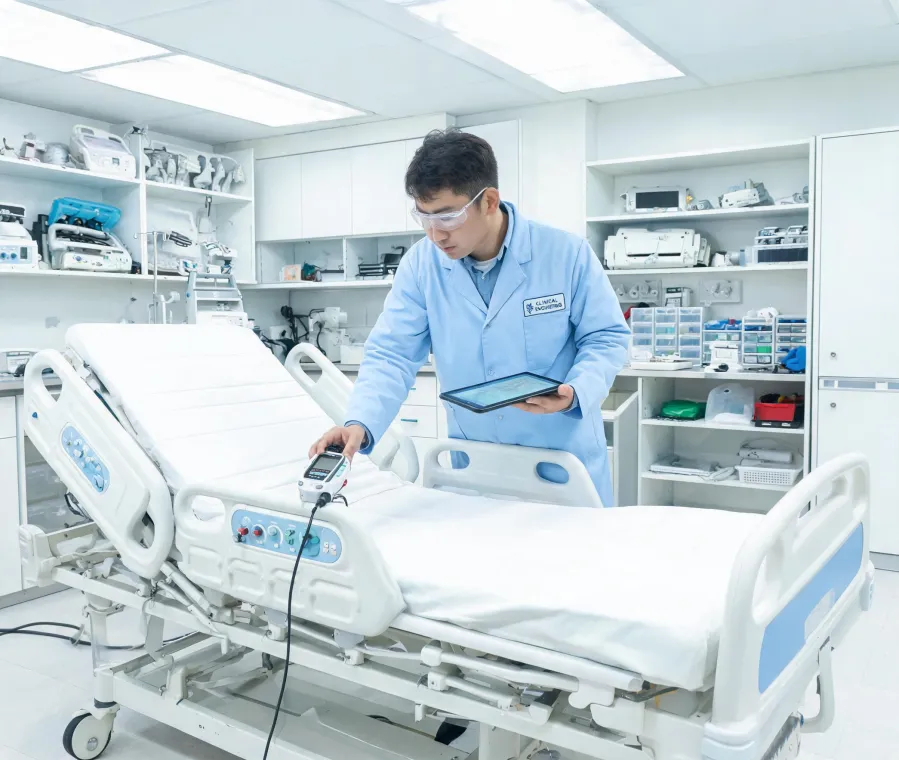 Installed-base service · PM · parts · loaner
Service & customer success controls
Urban on-site targets under 4 hours for critical faults, suburban under 8 hours, rural under 24 hours, with a multilingual triage hotline.
Depot map by SKU, turnaround time, predictive maintenance triggers, and loaner coverage during out-of-warranty repair windows.
Annual in-service hours, virtual classroom modules, and competency records aligned to nursing and biomedical roles.
Firmware orchestration, SBOM disclosure, CVE response SLA, and CAPA bulletins kept with the asset record.
Standard 8×5, Premium 24×7 with 4-hour on-site, and Premium+ predictive maintenance with parts pre-position.
Regulatory & quality checkpoints
These are review frameworks, not a claim that every Hill Rom SKU carries every mark in every market. Confirm the current label and summary for the destination country.

Use “FDA cleared” language for 510(k) patient-support devices. Request the predicate summary, intended-use statement, and labeling revision for the exact catalog number.
Confirm Notified Body involvement where applicable, UDI placement, IFU language pack, and post-market surveillance plan for the EU destination.

Map design controls, supplier controls, CAPA, complaint handling, and service documentation interfaces to your hospital QMS expectations.
Review basic safety, essential performance, EMC, and alarm fatigue mitigation strategies before connecting beds to nurse-call or EMR pathways.
Preserve DI, PI, lot or serial fields, and receiving records so fleet assets remain traceable through PM, complaint, and field-action workflows.
Care settings
Scroll the care-setting cards. Alarm strategy, battery runtime, training load, and reimbursement path change with the environment.
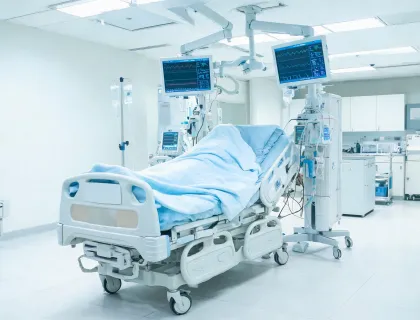 Critical care ICUAlarm priority · battery backup · 24×7 service
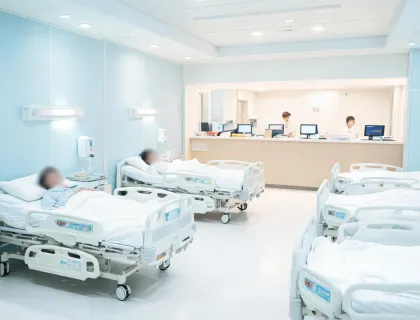 Med-surg wardsExit alarm · nurse call · PM cadence
 Ambulatory surgeryTurnover time · transfer aids · accessory rails
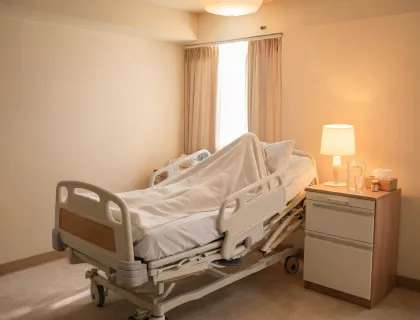 Long-term careDurability cycles · staff competency · HCPCS
 Home healthCaregiver training · discharge bundle · hotline
 PerioperativeTable articulation · UDI · sterile field workflow
Anonymous role quotes — not hospital endorsements
Move from brochure to bounded evaluation
The clinical desk will route demo, 510(k)/CE summary, IFU, or service-contract requests without accepting patient records.
Speak to a Clinical Specialist